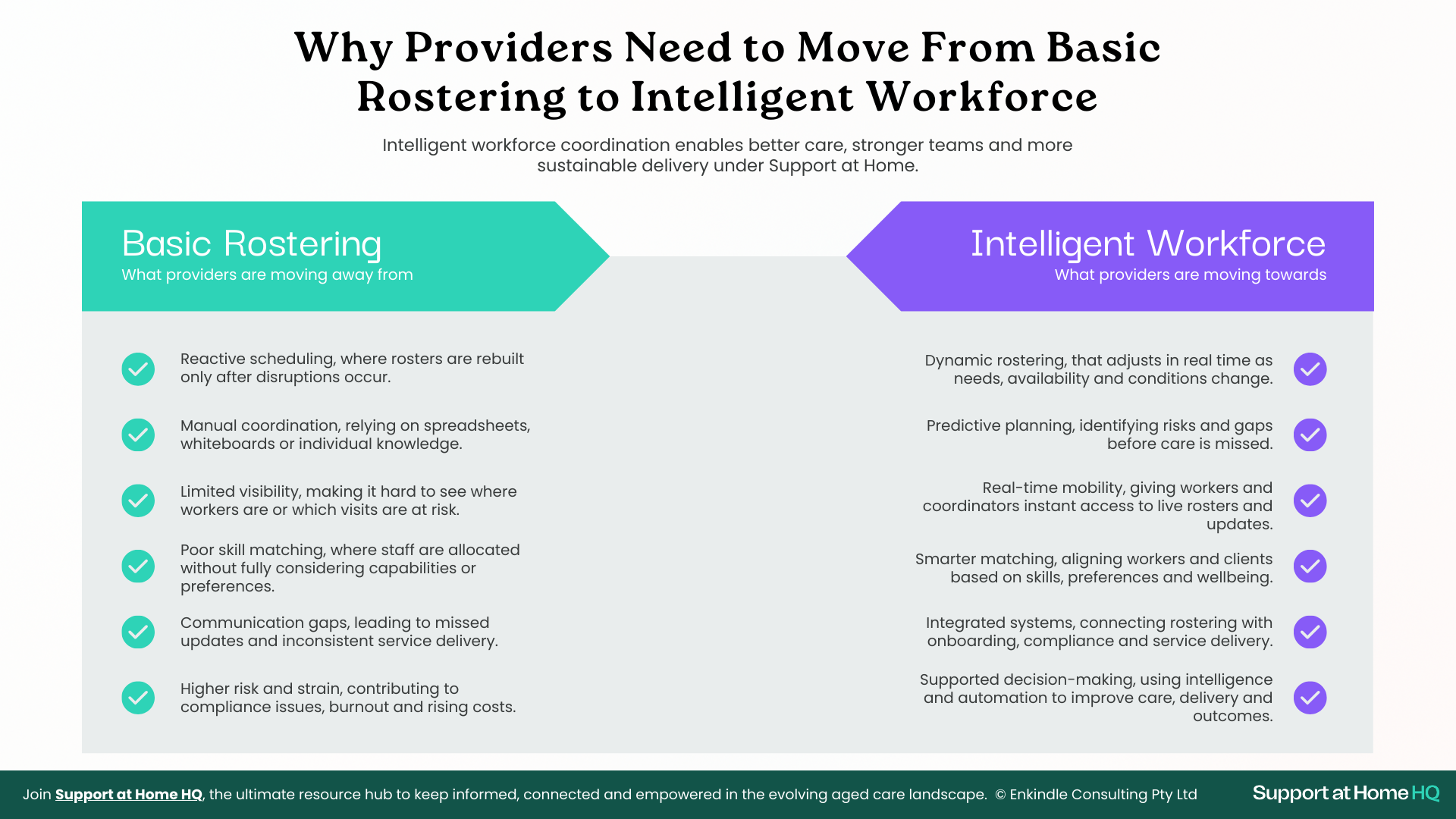
As providers fully implement the Support at Home program, one operational function is emerging as a critical differentiator: workforce coordination. Rostering is no longer a back-office task or an administrative afterthought. It is the engine that determines whether care is delivered safely, consistently, and in line with client expectations. Providers are moving from manual, static rosters to intelligent, integrated workforce systems that connect people, data and care delivery in real time.
This article explores why rostering matters more than ever, the risks of traditional approaches, and what intelligent workforce coordination looks like in practice for Support at Home providers.
Fill out the form to access the full article.